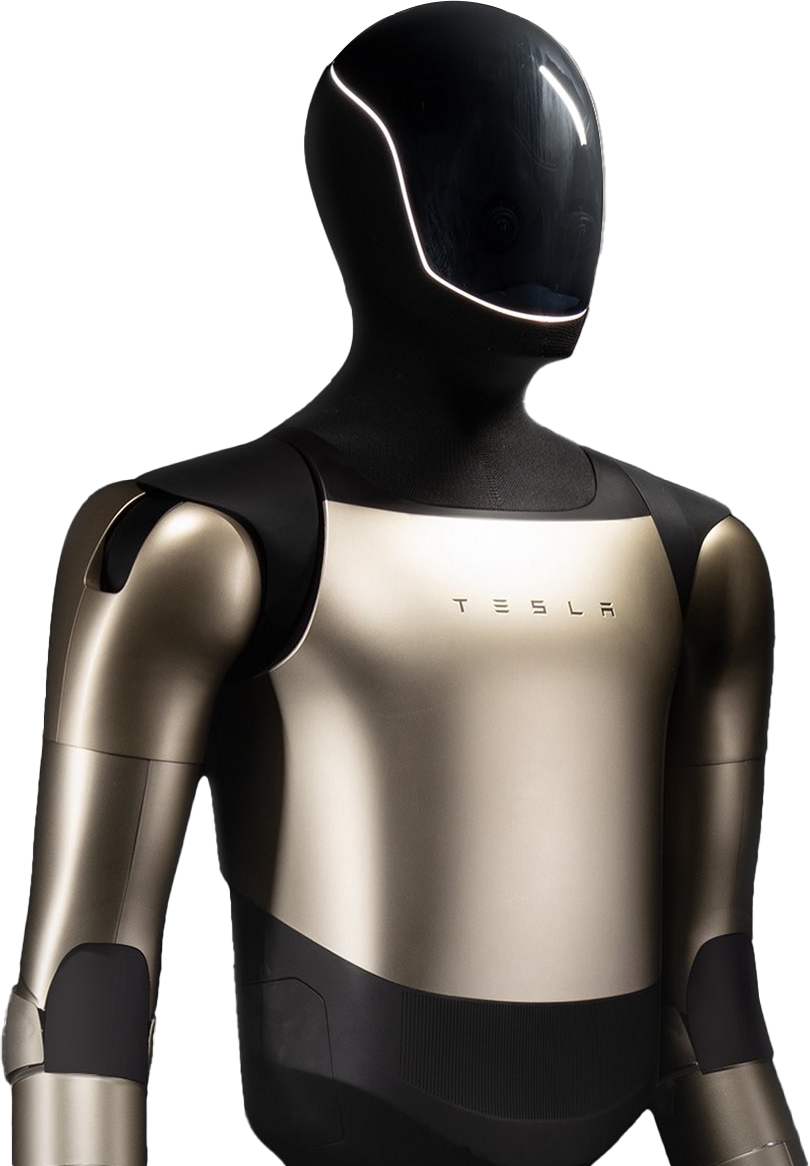
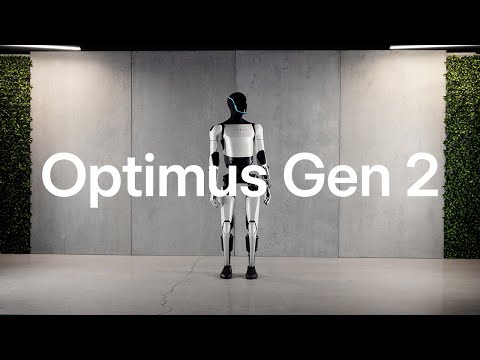
Height5 ft 8 in / 173 cm Gen 2 figure; V3 full-body dimensions not yet official
Weight125 lb / 57 kg Gen 2 — 10 kg lighter than Gen 1
Hands22 DOF per hand V3 — up from 11 in Gen 2; tendon-driven from forearm actuators
TouchTactile sensing on all five fingers Tesla-designed fingertip sensors, introduced on Gen 2
Walking speedUp to 5 mph / 8 km/h design target; Gen 2 walked 30% faster than Gen 1
Payload~44 lb / 20 kg rated carry capacity, roughly 9 kg per hand
Battery2.3 kWh torso pack sized for a full work shift, ~8-hour estimated runtime
Actuators28 body + ~50 in V3 hands planetary roller screws in the body; hand actuators in the forearms
Total DOF72+ 28 body joints plus 22 per hand on V3
VoiceGrok (xAI) natural-language interaction and task orchestration on Gen 3
Production startAug 2026, Fremont converted Model S/X line; initial output “quite slow” per Musk
Capacity targets1M/yr Fremont · 10M/yr Giga Texas dedicated Texas factory under construction, meaningful output 2027
Price target$20,000–$30,000 Musk’s long-term at-scale target, not near-term pricing
VISION / AI
Vision-only, FSD-derived neural nets
An adapted version of Tesla’s Full Self-Driving stack: camera pixels in, joint-level actions out — no lidar, no hand-coded control. A vision-language-action model takes what it sees plus plain-English instructions and outputs motor commands.
HANDS
22-DOF tendon-driven hands with touch
The V3 hand doubles Gen 2’s degrees of freedom, driven by tendons routed from forearm actuators through the wrist. Tactile fingertips enable precision grips on delicate objects.
LEARNING
Learns tasks from human video
No task-specific programming: humans demonstrate on first-person video, the network learns by imitation, refines motor skills in simulation, and every robot inherits the skill fleet-wide.